

What is a chronometer? COSC and Master Chronometer certification explained
"Chronometer" on a watch dial isn't marketing: it means the movement passed an official accuracy test in Switzerland. This is what the test involves, how Omega's stricter Master Chronometer goes further, and whether it's worth paying for.

We don't sell watches. Links to retailers are affiliate links: if you buy after following one, the retailer may pay us a commission. You pay the same price, and no brand or retailer pays to appear. How this works
In this guide
The short answer: a chronometer is a watch whose movement passed the official Swiss accuracy test run by COSC: an average of -4 to +6 seconds a day, over about 15 days, in five positions and three temperatures. Omega's Master Chronometer goes further: the whole watch is tested by METAS, including against strong magnets. It's proof of quality in a mechanical watch, though any quartz watch keeps better time for far less.
How we wrote this
The test criteria come from COSC's own website, and the Master Chronometer criteria from Omega's. Which watches are certified comes from the brands' own pages, as recorded on our watch pages. We earn a commission if you buy through our links, which never changes the price you pay.
How COSC tests a chronometer
COSC (Contrôle Officiel Suisse des Chronomètres) is the independent Swiss body that certifies chronometers, to the international standard ISO 3159. According to COSC:
| The test | |
|---|---|
| Length | 12 to 20 days depending on the type; about 15 days for automatic watches |
| Positions | Five, including dial up, dial down and crown positions |
| Temperatures | Three: 8°C, 23°C and 38°C |
| Accuracy | An average daily rate between -4 and +6 seconds a day |
| Proof | A unique number engraved on each certified movement |
Master Chronometer: Omega's stricter test
According to Omega, its Master Chronometer watches are certified twice: first the movement by COSC, then the whole watch by METAS, the Swiss federal institute of metrology. METAS tests:
- Accuracy of 0 to +5 seconds a day (up to +7 for some calibres): it never runs slow.
- Resistance to magnetic fields of 15,000 gauss, far stronger than everyday magnets in phones, bags and speakers.
- The finished watch, not just the movement, including its water resistance and power reserve.
Watches with certification
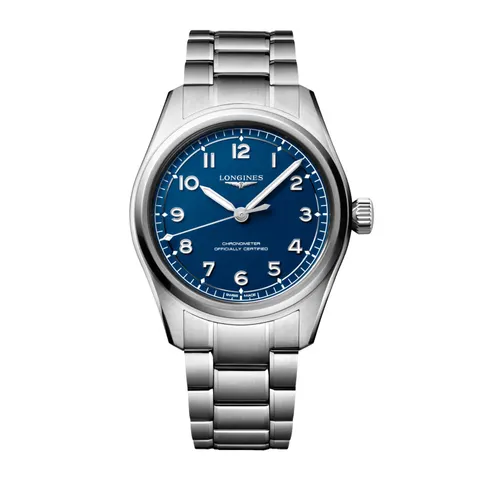
A COSC chronometer: Longines Spirit. The Longines Spirit Pilot is a COSC-certified chronometer, according to Longines.
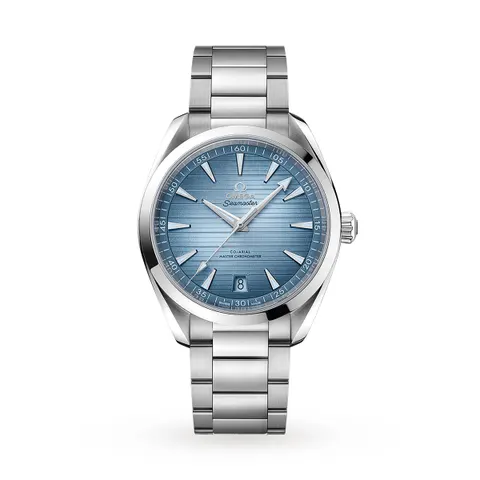
A Master Chronometer: Omega Seamaster Aqua Terra. Omega's Aqua Terra is a METAS-certified Master Chronometer. See our Omega guide.
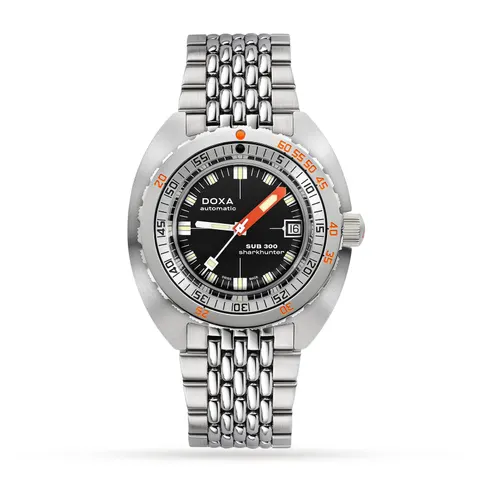
A dive watch chronometer: DOXA Sub 300 Sharkhunter. DOXA's diver is COSC-certified too.
Is it worth paying for?
- Yes, if: you want a mechanical watch with proven, independently tested accuracy, and the craftsmanship it stands for.
- Not needed if: you just want accurate time. A quartz watch is far more accurate than any mechanical chronometer, for much less; see our automatic vs quartz guide.
- Don't confuse it with "chronograph": that's a stopwatch function, not a certificate.
Get our Black Friday price checks
We'll email you the real Black Friday reductions at Goldsmiths, checked against our own daily price records, and the week's biggest price drops. Unsubscribe any time.
Nothing until you confirm, and every email has a link to stop. Privacy
Questions people ask
What does chronometer mean on a watch?
How accurate is a COSC chronometer?
What is a Master Chronometer?
Is a chronometer worth it?
What's the difference between a chronometer and a chronograph?
Related guides
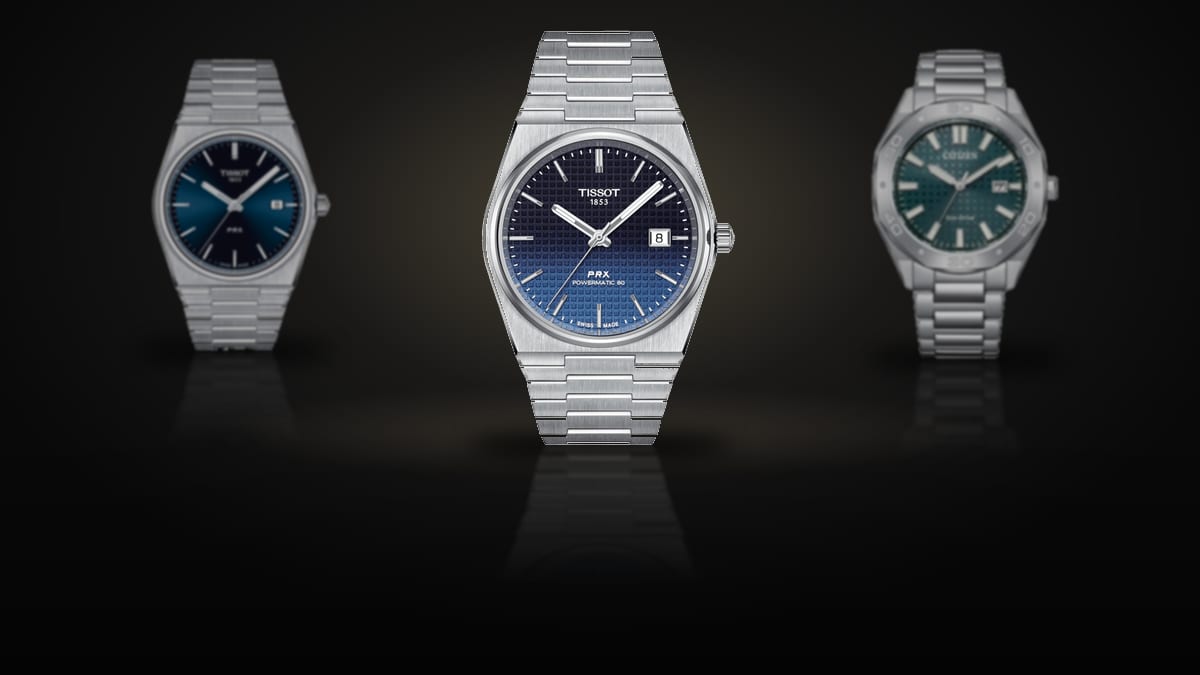 Automatic, quartz or solar? How to choose a watch movementThe movement is the engine inside a watch. It decides how accurate the watch is, whether it needs a battery, and what looking after it involves. Here's how the three main types compare.
 The best Omega watches to buy in the UK (2026)Seamaster, Speedmaster, Aqua Terra, Constellation, De Ville: Omega makes a lot of watches, and the names don't make the choice easy. This is which Omega to buy and why, for men and women, from the one James Bond wears to the one that went to the Moon.
 The best luxury watches for men in the UK (2026), from £5,000From £5,000, you're buying from the great names: IWC, Omega, Panerai, Zenith, Cartier and Breitling, with movements they make themselves and power reserves of up to five days. These are the best luxury watches for men you can buy new in the UK, from £5,000 up, and how to choose.
 Sapphire vs mineral vs acrylic: which watch crystal is best? (2026)The "crystal" is the clear cover over a watch's dial, and it's made of one of three materials: sapphire, mineral glass or acrylic. Each has a trade-off between scratching and shattering. This is how they compare, and which well-known watches use each.
 Watch water resistance explained: what 30m, 50m, 100m and 200m really meanA watch marked "30m" can't go 30 metres underwater, and most people only find that out the hard way. This is what each water resistance rating really allows, from splashes to scuba diving, using a watchmaker's own official chart, with examples of each.
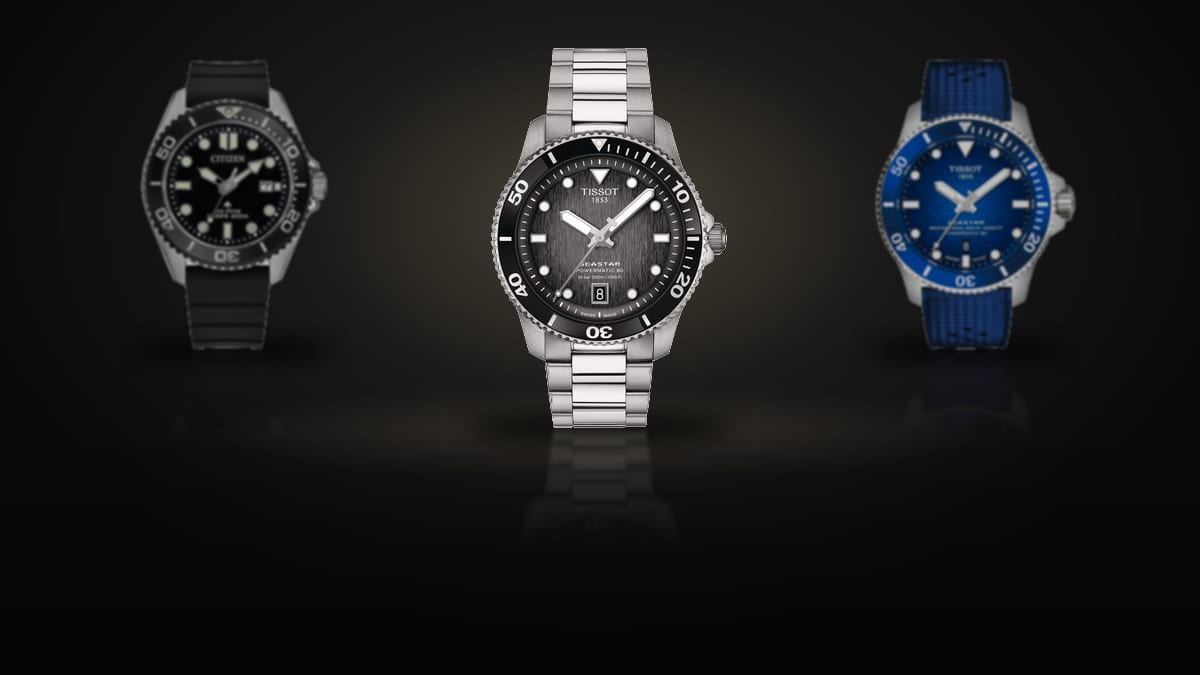 The best dive watches under £1,000 in the UK (2026)From a £129 quartz diver to a 600-metre Swiss professional, these are the best dive watches you can buy new in the UK for under £1,000, with which ones are certified for real diving and which are best kept for the beach.
How we write these guides: every watch is one you can buy new from a UK authorised retailer. Prices and specifications come from the retailer's own product page, and anything extra comes from the brand's website. We check prices and stock every morning, but they can change, so the retailer's page always has the final word. No brand or retailer pays to appear. Read how we choose watches and jewellery and our editorial policy; spotted a mistake? Email contact@sterlingguild.co.uk.